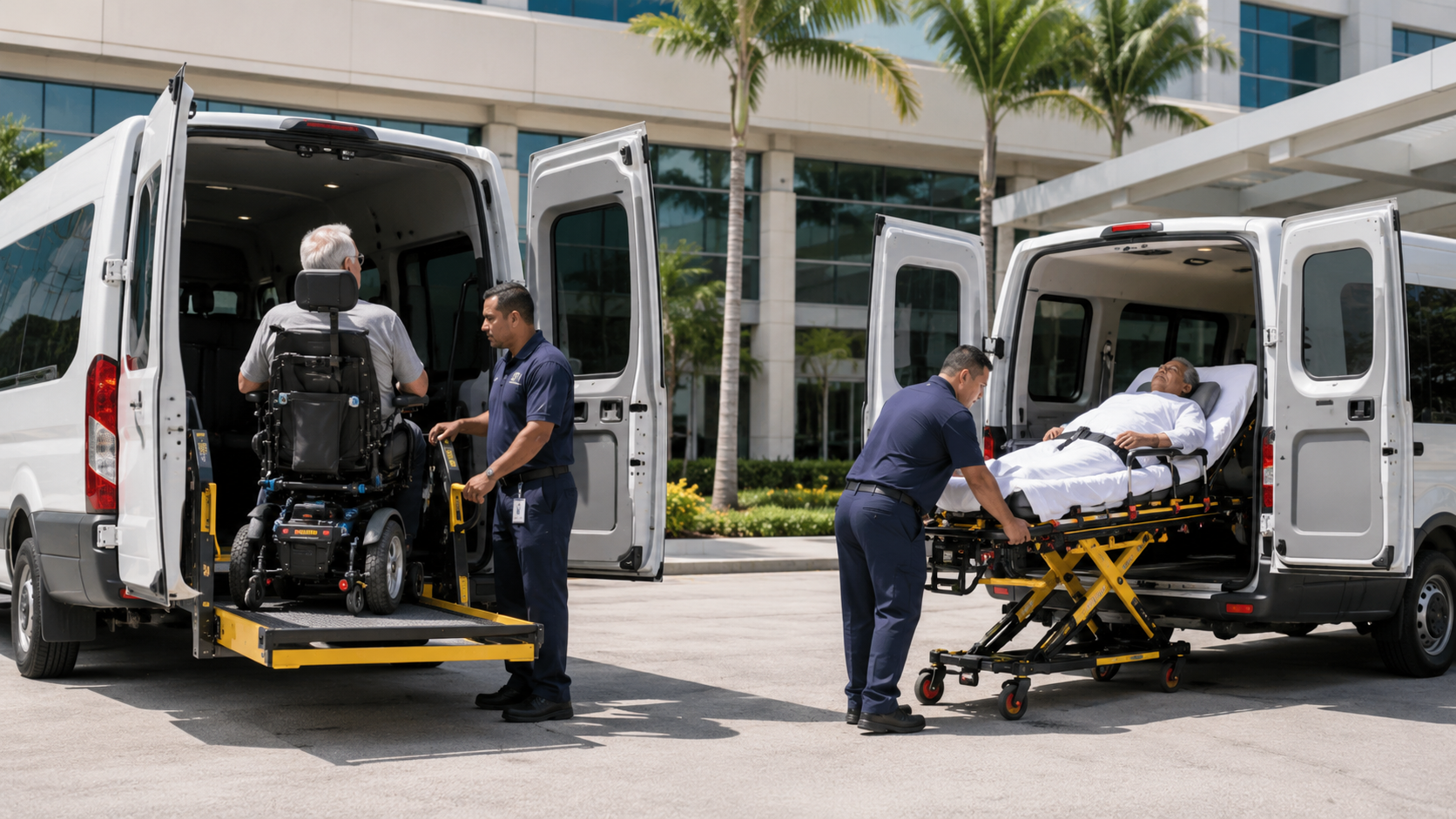
Wheelchair vs. Stretcher Medical Transport: Which Do You Need?
Wheelchair and stretcher medical transport serve different patient needs. Learn the key differences, when each service is appropriate, and how to choose the safest non-emergency medical transportation option for your next appointment.
Choosing the right ride for a medical appointment isn't always obvious. Some patients need a little extra help getting into a van. Others need to travel lying flat the entire way. Getting this decision right the first time saves families from a rescheduled appointment or, worse, a ride that isn't equipped to keep a loved one safe. If you're arranging non-emergency medical transportation in Miami-Dade or Broward County, here's how to tell whether you need wheelchair transport or stretcher transport, and what each ride actually looks like.
Quick answer: Choose wheelchair transport if the patient can sit upright safely and comfortably for the whole trip but can't walk, stand, or climb into a car unassisted. Choose stretcher transport if the patient cannot sit upright, needs to remain lying flat or reclined, or has a doctor's order restricting sitting during transit. When unsure, describe the patient's condition to your transportation provider and let them help match the vehicle.
What Wheelchair Transportation Covers
Wheelchair transportation is built for patients who can sit upright for the full trip but can't safely climb into a standard car or manage stairs. This covers a wide range of situations: someone recovering from hip surgery, a senior with limited mobility, or a patient who uses a wheelchair full-time. ATC's wheelchair transportation service uses ADA-compliant vans with ramps and four-point tie-downs, so the wheelchair itself is secured for the entire ride rather than folded up and stored separately. A trained driver assists with boarding, positioning, and unloading at the destination.
This is the right fit for most routine medical trips: dialysis sessions, physical therapy, follow-up visits, and outpatient procedures, where the patient is stable and upright but needs door-to-door assistance getting there.
What Stretcher Transportation Covers
Stretcher transportation is for patients who cannot sit upright for the ride, whether due to a medical condition, post-surgical recovery, or a doctor's order to remain flat. ATC's stretcher transportation service uses fully equipped stretcher vehicles with a trained attendant riding along, not just driving. Bariatric stretcher transport is also available for patients who need higher weight-capacity equipment, a common request from hospitals and rehab facilities discharging larger patients who still need to travel lying down.
Common reasons families and facilities book stretcher transport include hospital-to-hospital transfers, post-surgical discharges where sitting up isn't allowed yet, and patients with conditions that make upright travel unsafe or painful. It's a higher level of service than wheelchair transport, though it's still not an ambulance. There's no emergency medical care or monitoring on board.
| Factor | Wheelchair Transport | Stretcher Transport |
| Patient position | Seated upright | Lying flat or reclined |
| Best for | Can sit but can't walk or stand safely | Cannot sit upright safely |
| Equipment | Ramp or lift, four-point wheelchair securement | Medical stretcher, full securement |
| Staff assistance | Driver assists boarding and positioning | Trained attendant rides along for transfers |
| Typical use cases | Dialysis, therapy, routine appointments, full-time wheelchair users | Hospital discharges, post-surgical transfers, bariatric needs |
| Medical care on board | No | No |
How to Decide Between the Two
The deciding question is almost always: can this patient sit upright, safely and comfortably, for the length of the trip? If the answer is yes, wheelchair transport is typically sufficient, even if the patient uses a wheelchair full-time or needs help getting in and out. If the answer is no, or if a physician has specifically ordered the patient to remain flat, stretcher transport is the safer and often the required option.
A few additional factors help confirm the choice:
- Patient stamina: a patient who can sit but only for short periods may struggle on a longer trip. If the ride is long and the patient tires quickly or becomes unstable when seated, stretcher transport may be safer even if they can sit briefly.
- The transfer itself: think about how the patient gets from bed or chair into the vehicle. Someone who can be helped into a seated position manages wheelchair transport well; someone who can't be safely moved to a sitting position needs the trained transfer assistance that comes with stretcher transport.
- Discharge instructions that restrict sitting upright
- Spinal injuries or recent spinal surgery
- Severe pain or instability that makes upright positioning unsafe
When in doubt, call and describe the patient's condition. ATC's team can help determine the right vehicle type before the trip is booked, rather than after a driver arrives with the wrong setup.
Nemt Services in Miami-Dade and Broward
South Florida's hospital and rehab network means patients frequently need to travel across county lines, from a discharge in Hollywood or Pembroke Pines back to a rehab facility in Kendall or Hialeah, for example. That's a straightforward wheelchair transport for a stable patient, but a stretcher trip if the discharge team has ordered bed rest during transit. Dialysis patients in particular tend to stay in wheelchair transport long-term since they're upright and stable for the ride, just needing consistent, on-time scheduling three times a week.
For patients who need the same type of ride regularly, recurring dialysis, physical therapy, or outpatient treatment, ATC's monthly ride plans cover both wheelchair and stretcher trips and remove the need to rebook every week.
What to Expect on the Day of the Ride
Once the right vehicle type is booked, the process looks similar for both wheelchair and stretcher trips. A dispatcher confirms the pickup address, appointment time, and any special instructions the day before. The driver, or driver-and-attendant team for stretcher trips, arrives ahead of schedule to allow time for boarding and securement. For wheelchair transport, that means locking the chair into place with four-point tie-downs before the van moves. For stretcher transport, the attendant secures the stretcher, checks the patient's positioning, and monitors them throughout the ride.
Both ride types include help getting from the vehicle into the facility, not just curbside drop-off, a distinction that matters for patients heading into dialysis centers, outpatient surgery centers, or hospital lobbies.
Frequently Asked Questions
Is stretcher transport the same as an ambulance?
No. Stretcher transport moves a patient lying down but provides no emergency medical care or monitoring during the trip. An ambulance is staffed by EMTs or paramedics for patients who need medical care en route.
Does Medicaid or insurance cover wheelchair or stretcher transport in Florida?
For eligible patients, Florida Medicaid and some private insurance and broker plans cover non-emergency medical transportation, including wheelchair and stretcher service. Coverage depends on eligibility and plan type, so confirm your benefits before booking, or ask ATC's team to help verify.
Can a patient switch between wheelchair and stretcher transport for different appointments?
Yes. Many patients use wheelchair transport for routine visits and switch to stretcher transport temporarily after a procedure or hospital stay, then switch back once they're cleared to sit upright again.
What if a patient's needs change between booking and pickup?
Call as soon as possible before the scheduled pickup. Switching a booking from wheelchair to stretcher transport, or the reverse, usually just requires updating the vehicle and staffing assigned to the trip.
Not Sure Which One You Need?
You don't have to make this call alone. ATC Medical Transport has served Miami-Dade and Broward County for over 12 years, and our team can walk through the patient's condition with you to recommend the right vehicle before the ride is scheduled. Whether it's a single trip or a recurring need, book a ride or contact our team to confirm which service fits.