McKinney-Vento Transportation in South Florida
How South Florida districts get students to their school of origin. Learn McKinney-Vento transportation basics and how ATC and Trust-Ed handle every ride.
When a family loses stable housing, a student's school is often the one thing that does not have to change. Federal law backs that up. Under the McKinney-Vento Act, districts must make sure students experiencing homelessness can keep attending their school of origin, and that includes getting them there. In South Florida, where families move between counties, that is easier said than done.
This guide explains how McKinney-Vento transportation works, where it overlaps with foster care and special education rides, and how districts can cover these trips with a local partner. For districts that want to learn more, see our school transportation service.
What Is McKinney-Vento Transportation?
The McKinney-Vento Act protects the educational rights of children and youth experiencing homelessness. One of its core protections is school stability. A student can stay in their school of origin, meaning the school they attended when they last had permanent housing or the school where they were last enrolled.
When a parent, guardian, or unaccompanied youth asks for it, the district must provide or arrange transportation to and from that school. A few points districts should keep in mind:
- Districts cannot apply a blanket mileage or time limit. Each student's situation is reviewed individually, with the student's best interest at the center.
- The district decides the mode of transportation, whether that is a bus, a vehicle with a trained driver, or another arrangement that works.
- Every district designates a homeless education liaison who helps coordinate these rides.
Which Students Qualify?
McKinney-Vento covers children and youth who lack a fixed, regular, and adequate nighttime residence. That includes students who are:
- Staying in emergency shelters or transitional housing
- Living in motels, cars, parks, or other public spaces
- Sharing housing with other people because of a loss of housing or economic hardship
Eligibility is decided by the school district, so families should start with their school's McKinney-Vento liaison.
When a Student Crosses District Lines
A family may move to a new part of the county or to a different county while the student stays enrolled at the same school. When that happens, the district of origin and the district where the family now lives have to work together. They agree on how to share the responsibility and the cost of the ride. If they cannot agree, they share it equally.
These cross-district trips are some of the hardest to run. Routes are long, schedules are tight, and families often need the ride to start right away. A partner that already operates across South Florida can take much of that complexity off a district's plate. Learn more about our South Florida school transportation coverage.
Why Yellow Buses Cannot Always Cover These Trips
School bus routes are built for large groups on predictable schedules. McKinney-Vento rides rarely fit that pattern. Districts often face:
- Out-of-zone trips that sit far outside any existing route
- Single-student or small-group rides that are inefficient for a full-size bus
- Short notice, since a student may need transportation within days of a housing change
- Overflow when the fleet or driver pool is already stretched
A dedicated transportation partner fills those gaps without forcing districts to build new routes for every case.
Foster Care and Special Education Rides
McKinney-Vento is not the only federal law that can require a student ride. Two others come up often:
- Foster care (ESSA). The Every Student Succeeds Act requires education and child welfare agencies to coordinate so that students in foster care can stay in their school of origin when it is in their best interest. That coordination includes transportation, so districts often work alongside caseworkers on school stability rides.
- Students with disabilities (IDEA and ESE). When an IEP team decides a student needs transportation as a related service, the district has to provide it. Many of these students need wheelchair-accessible vehicles, trained drivers, and coordination with aides. Our wheelchair transportation and ambulatory transportation fleets are built for that kind of care.
Whichever law applies, the district needs the same things: a safe ride, a trained driver, and records that hold up in an audit.
What to Look for in a School Transportation Partner
- Licensed and insured operations with a local team that answers the phone
- Trained, background-checked drivers. ATC's drivers are PASS-certified, trained in passenger assistance, safety, and sensitivity.
- ADA-compliant vehicles for students with mobility or medical needs
- Real-time visibility so staff know where each student is on every trip
- Built-in documentation that supports McKinney-Vento, IDEA, and ESSA requirements and makes audits and reimbursement easier
- Clear per-trip billing your business office can reconcile
How ATC and Trust-Ed Handle a School Ride
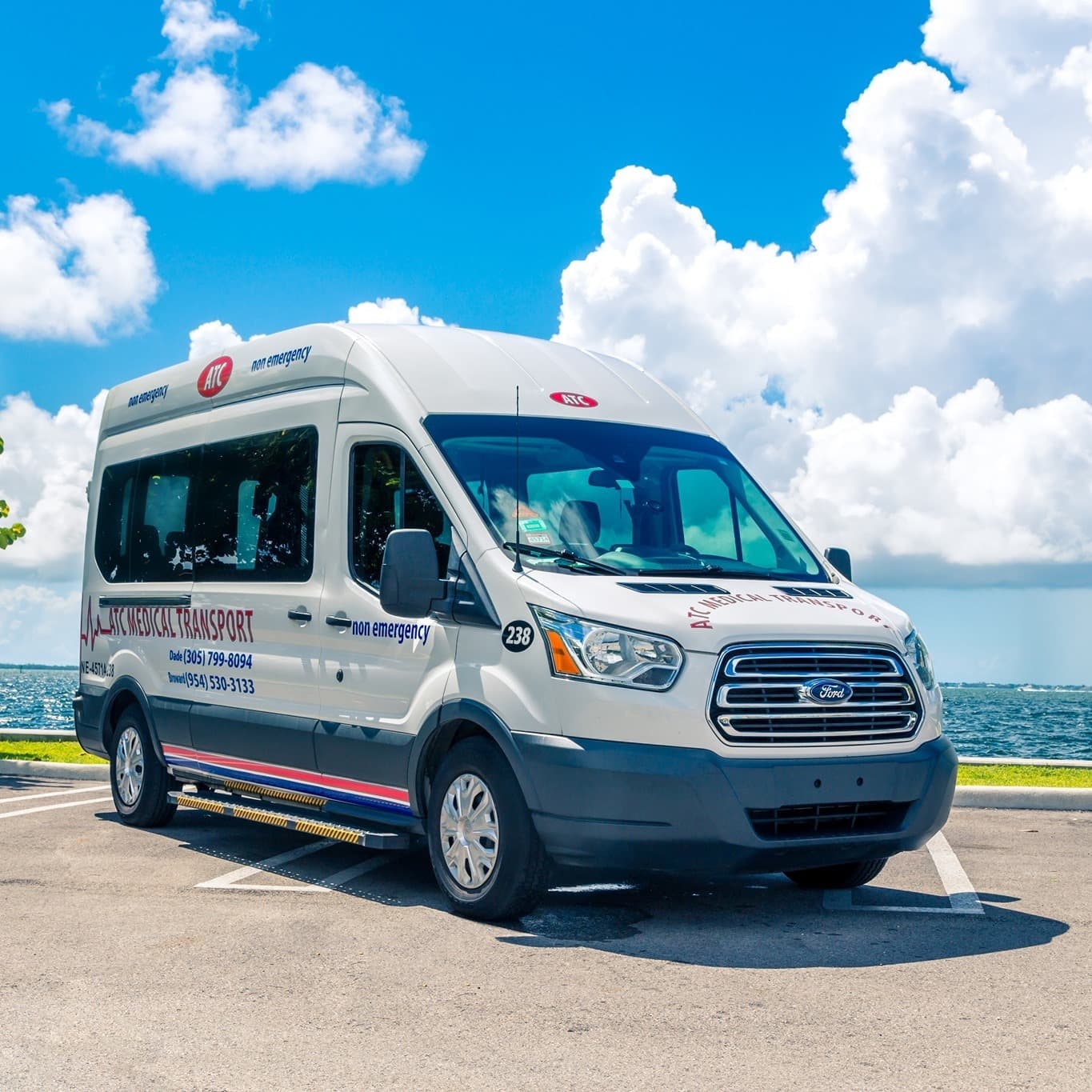
ATC Medical Transport has served South Florida since 2014. For students, we pair our local drivers and vehicles with Trust-Ed, a student transportation platform built for K-12 districts. A typical ride looks like this:
- Request. District staff enter the student, program, and schedule in the Trust-Ed District Portal.
- Match. The platform pairs the student with a vetted ATC driver and the right vehicle for their needs.
- Track. District staff, and families where appropriate, see pickup, drop-off, and ETA updates in real time.
- Report. Trip logs and compliance records are captured automatically for audits and reimbursement.
You can see the full program on our school transportation page.
What Families Should Know
School rides are arranged through the school, not directly by parents. If your family is experiencing homelessness, is involved with foster care, or has a child with an IEP, ask your school's McKinney-Vento liaison, ESE office, or foster care contact whether your child qualifies. Once a ride is set up, families can use the Trust-Ed Parent app to see who is driving, follow the trip live, and know when their child arrives at school.
McKinney-Vento Transportation: Frequently Asked Questions
Who can request McKinney-Vento transportation?
A parent, guardian, or unaccompanied youth can request it through the school or the district's McKinney-Vento liaison. The district then provides or arranges the ride.
Does McKinney-Vento transportation cross county lines?
Yes, it can. If the school of origin is in another district or county, the districts involved coordinate on the ride and share the responsibility and cost.
Who pays when a student crosses district lines?
The two districts agree on how to split the cost. If they do not reach an agreement, they share it equally.
Can students who use wheelchairs ride with ATC?
Yes. Our ADA-compliant fleet includes wheelchair-accessible vehicles, and our drivers are PASS-certified. We coordinate with districts on IEP requirements, including aides when needed.
How does a district get started?
Contact our team to set up a District Portal walkthrough. We will review your program, schedules, and compliance needs before the first ride.
Talk to ATC About Your District's Routes
If your district needs a reliable local partner for hard-to-route trips, McKinney-Vento, foster care, or IEP transportation, we are ready to help. Request a district consultation, call 305-799-8094, or email Trust-ed@atcmedicaltransport.com.
This article is general information, not legal advice. Districts should confirm requirements with their own policies and the Florida Department of Education.